By Mithun
How DSLR and mirrorless cameras differ in viewfinder, autofocus, battery, weight and lenses, and which one to buy in 2026.
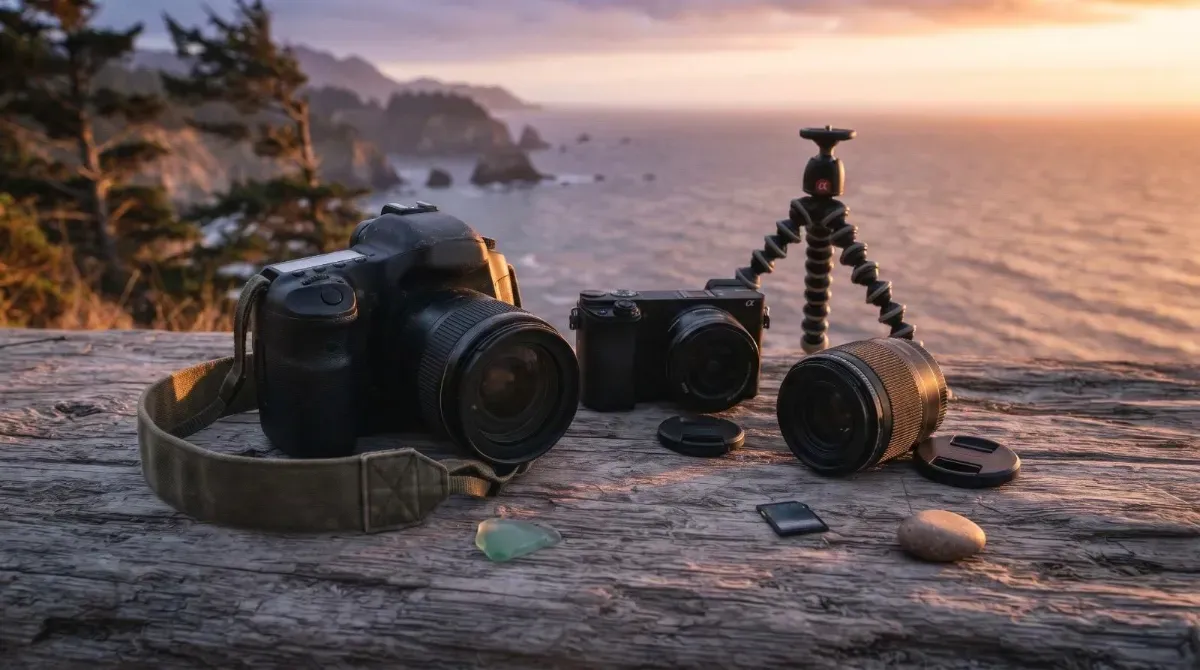
A DSLR and a mirrorless camera with the same sensor take photos of the same quality. The difference is the mirror. A mirrorless camera is lighter, shows you the exposure before you shoot, can focus anywhere in the frame, records better video, and is where every brand now releases its new cameras and lenses. A DSLR keeps an optical viewfinder and lasts longer on a battery when you use it. Here is how the two compare, and which one suits you. If you are just starting out, our DSLR for beginners guide covers modes and settings, and more guides are in Photography & Gear.
In a DSLR, a mirror behind the lens reflects light up through a prism into the optical viewfinder, so you see the scene through the lens itself. When you press the shutter button, the mirror flips up so light can reach the sensor. A DSLR also focuses through the viewfinder with a separate focusing sensor.
A mirrorless camera has no mirror, so light goes straight from the lens to the image sensor. That sensor does the focusing as well, and the viewfinder is a small screen showing what the sensor sees, as Canon's guide to mirrorless and DSLR cameras explains.
| DSLR | Mirrorless | |
|---|---|---|
| Viewfinder | Optical, uses no battery power | Electronic, previews brightness and colour before you shoot |
| Autofocus | Focus points through the viewfinder | Focus point anywhere in the frame, with face, eye and animal tracking |
| Size and weight | Larger and deeper | Smaller and thinner |
| Battery | Longer when using the viewfinder | Shorter through the viewfinder |
| Video | Basic | Better, with subject tracking |
| Speed and sound | Up to 16 frames per second (Canon) | Up to 40 frames per second (Canon), with a silent shutter |
| Lenses | Large existing range, few new lenses | Every new lens, plus adapters for DSLR lenses |
| Sensor dust | Sensor protected behind the mirror | Sensor exposed when the lens is off |
An electronic viewfinder shows the effect of your settings before you take the photo, so you see if the picture will be too bright or too dark. It also lets you compose and focus in light too dim to see by eye, and can show focus peaking, which highlights the sharp edges in the frame. An optical viewfinder gives a clear, natural view in good light and uses no battery power, but it cannot preview exposure or white balance. A DSLR shows that preview only on the rear screen in Live View.
Autofocus is where mirrorless cameras pull ahead. Because the image sensor itself focuses, you can place the focus point anywhere in the frame, which Canon describes as "impossible on a DSLR". Mirrorless cameras can also track faces, eyes and animals as they move.
A DSLR battery lasts longer only when you use the optical viewfinder. Canon rates the EOS 90D DSLR at about 1,200 shots per charge through the viewfinder but about 450 on the rear screen. The mirrorless EOS R6 Mark III gets about 390 shots through its electronic viewfinder and 620 on the screen. Across cameras, Digital Camera World puts basic DSLRs at about 600 shots and most mirrorless cameras at 350 to 400, so carry a spare battery with a mirrorless camera.
The weight gap is largest with full-frame cameras. Canon's example puts a mirrorless EOS R8 with a 24-105mm lens at about 1,161 g, while a DSLR EOS 6D Mark II with a similar lens weighs about 1,560 g, more than 34% heavier.
With beginner cameras, the weight is close but the shape is not. Tom's Guide puts a Nikon D5600 DSLR with its kit lens at about 635 g and a Sony a6100 mirrorless camera with its kit lens at about 590 g, but the Sony body is about 4 cm deep against 7 cm for the Nikon, so it fits more easily in a small bag.
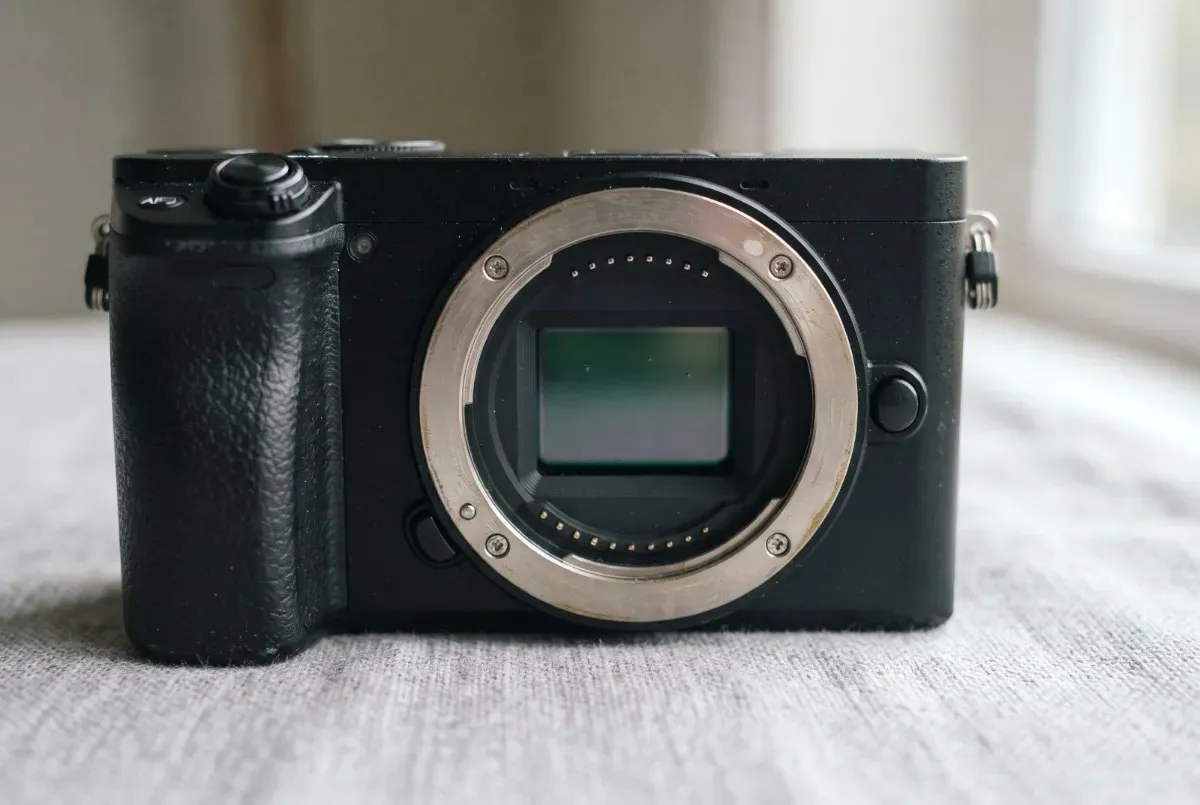
Yes, with the maker's adapter. Canon's EF-EOS R adapter keeps autofocus and image stabilisation working with Canon DSLR lenses, Canon says. Nikon's FTZ adapter keeps autofocus with lenses marked AF-S or AF-P, but older AF and AF-D lenses lose autofocus, Photography Life explains.
This matters because Canon and Nikon now develop new lenses only for their mirrorless cameras. If you own DSLR lenses, you can move to mirrorless without replacing them, and if you buy used DSLR lenses now, they can follow you to a mirrorless body later.
No, but it is shrinking fast. DSLR shipments fell 31% in 2025 to 690,911 cameras, 7.3% of all cameras shipped, according to CIPA figures reported by DPReview. Nikon stopped making its beginner D3500 and D5600 in 2022, while Canon built an estimated 580,000 DSLRs in 2025, reports Digital Camera World. In India, retailers such as Bajaj Mall still list the Canon EOS 1500D.
Choose a mirrorless camera if you:
Choose a DSLR if you:
For most people buying a new camera in 2026, mirrorless is the better long-term choice. Our DSLR for beginners guide lists the entry-level cameras launched in India, and our exposure triangle guide explains the settings that work the same on both.
For most people buying new, yes. Mirrorless cameras are lighter, focus anywhere in the frame, shoot better video and get all new lenses, while a DSLR’s advantages are its optical viewfinder and longer battery life through that viewfinder.
A mirrorless camera suits most beginners, because it shows the exposure before you shoot, which makes settings easier to learn. A used DSLR is a good choice on a tight budget.
No. Image quality depends on the sensor and lens, and both types come with APS-C and full-frame sensors.
Yes, with the maker’s adapter. Canon’s EF-EOS R adapter keeps autofocus and stabilisation, while Nikon’s FTZ adapter keeps autofocus only with AF-S and AF-P lenses.
The sensor is more exposed when you change lenses, so it can collect dust more easily, but it is also easier to reach with a blower. Change lenses with the camera facing down and away from wind.