By Mithun
A guide to three regional kitchens of South India: Chettinad's spices, Kerala's coconut and kudampuli, and Kongu's kochai varuval.
South Indian cuisine shares a common base of rice, a tempering of mustard seeds and curry leaves, and tamarind for sourness, but each region builds something different on it. This guide covers three of the most distinctive regional kitchens, Chettinad, Kerala and Kongu, along with seeraga samba, the rice behind Tamil Nadu's best-known biryanis.
Chettinad food comes from the Nagarathars (நகரத்தார்), a trading community from the Karaikudi area of Sivaganga district in Tamil Nadu. From the late eighteenth century they traded across Burma, Ceylon, Malaya and Singapore, and that trade brought meat and new ingredients into a kitchen that had been largely vegetarian.
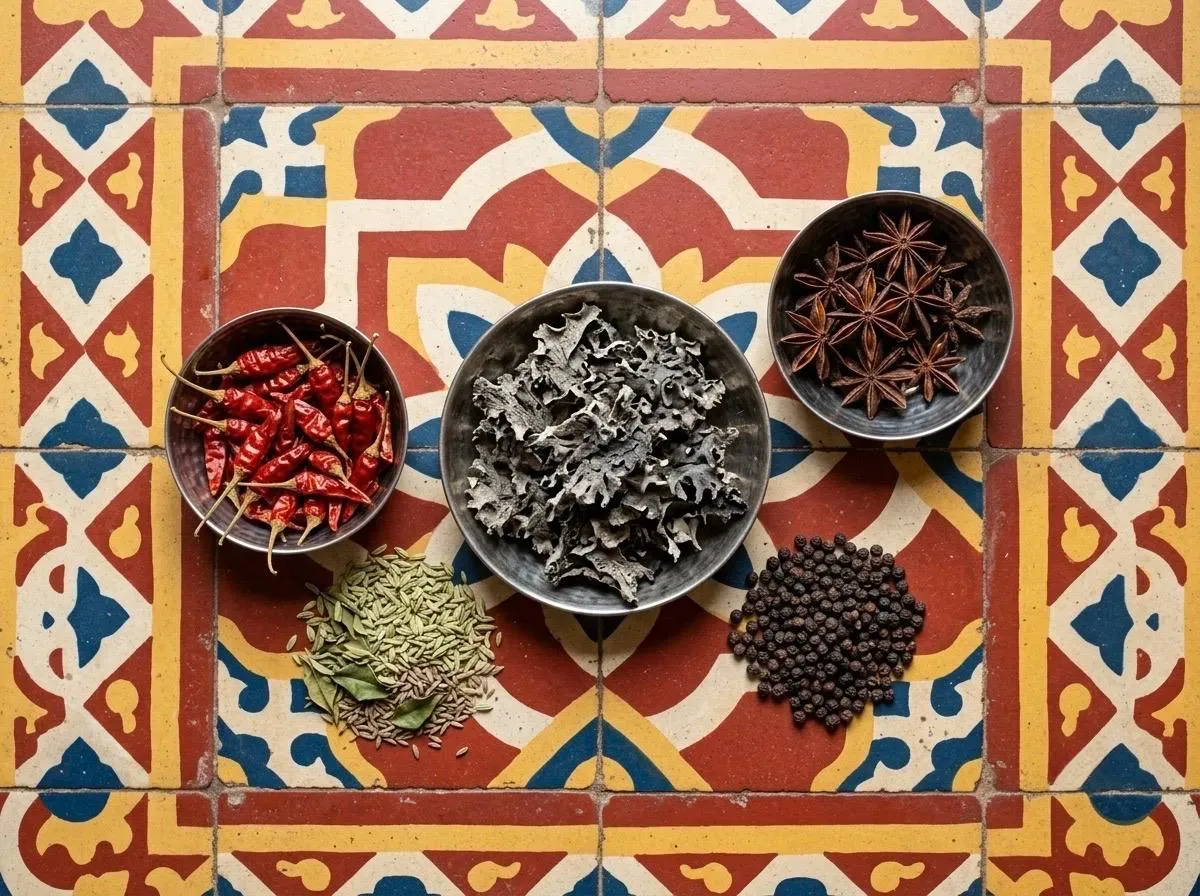
The signature spice is kalpasi (கல்பாசி), known in English as black stone flower. It is a lichen, and it releases an earthy aroma when fried in oil. Star anise, fennel and black pepper complete the spice box, and masalas are ground fresh rather than bought ready-made.
The region's dry climate explains its preserved foods: sun-dried meat, salted vegetables and dried fish, the last linked to the community's years in Burma. Burma kavuni (பர்மா கவுனி), a black rice, is used in pongal and sweet puddings.
Coconut is the base of Kerala food in three forms: grated, as coconut milk, and as coconut oil, the main cooking fat.
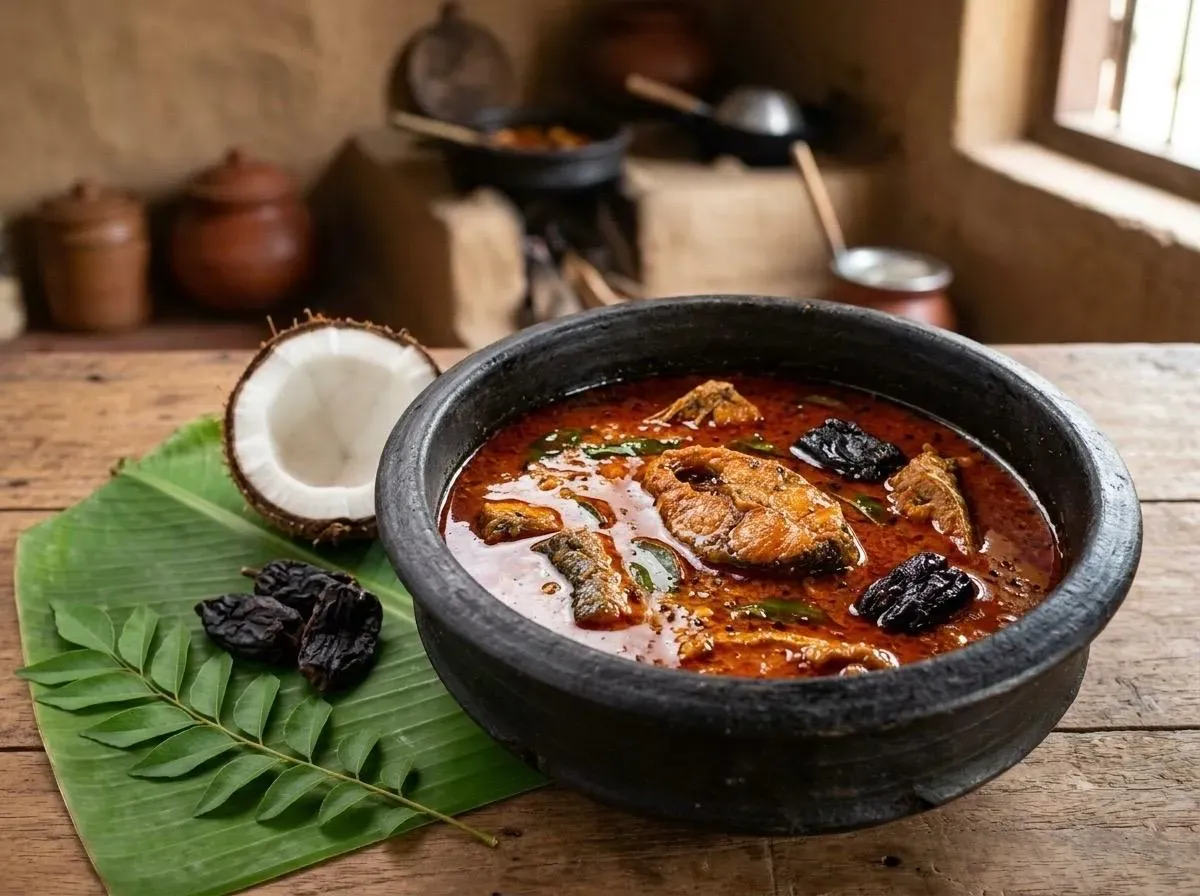
Kudampuli (കുടംപുളി), known in English as Malabar tamarind, is the dried rind of the Garcinia gummi-gutta fruit. It gives Kerala fish curry a softer, rounder sourness than ordinary tamarind, and its flavour develops as the curry rests, which is why the curry is often eaten a day after it is made.
Kerala's everyday rice is Palakkadan matta (പാലക്കാടൻ മട്ട), a red parboiled rice with a geographical indication tag. Its festive meal is the sadya (സദ്യ), a vegetarian feast of about twenty dishes served on a banana leaf for Onam, Vishu and weddings.
The Kongu region covers Erode, Salem, Coimbatore and the surrounding districts of western Tamil Nadu. Its best-known meat dish is built around the kōchai (கோச்சை), the Erode-region name for a native rooster of fighting stock, also called sandai seval (சண்டை சேவல்). These roosters are also used for meat in kari virundhu, Tamil meat feasts.
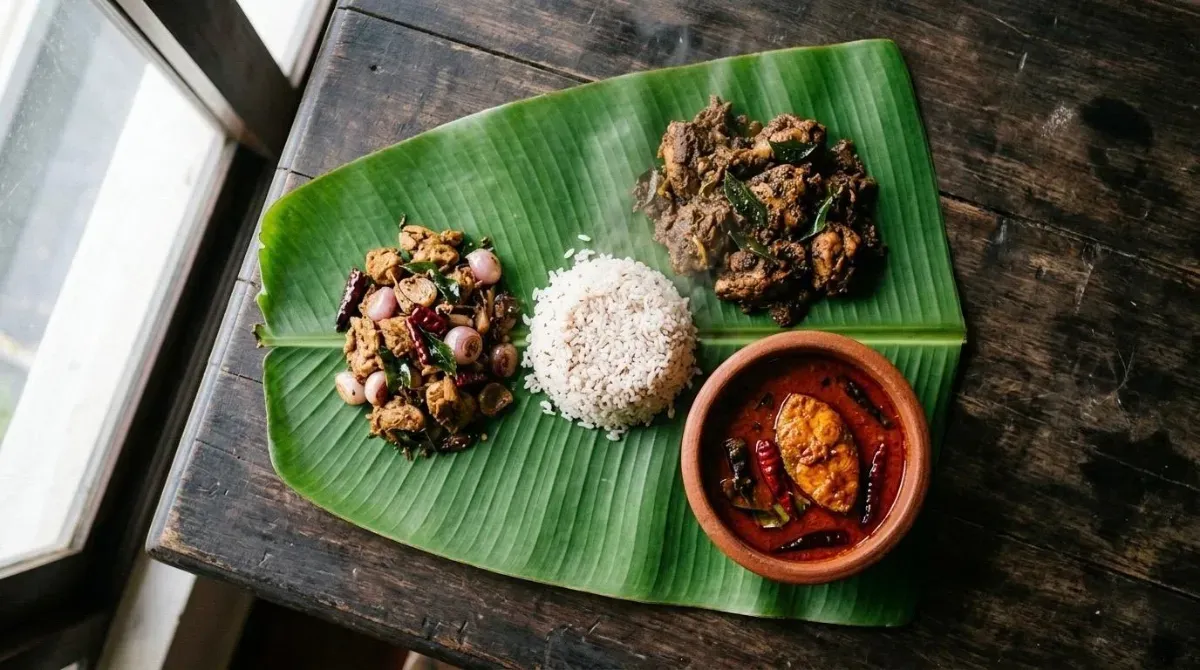
Like other nattu kozhi (நாட்டுக்கோழி, country chicken), kōchai meat is leaner and firmer than broiler chicken, so it is cooked slowly. It is traditionally prepared in a manchatti (clay pot) with small onions, dry red chillies and ground spices. Kochai varuval (கோச்சை வறுவல்) is the dry fry, kochai kari is the gravy, and a kochai virundhu is a meal built around both. Restaurants named after the dish serve kochai varuval in Salem and Coimbatore.
Another Kongu dish to know is Pallipalayam chicken, a spicy dry fry named after Pallipalayam, the town across the Kaveri river from Erode.
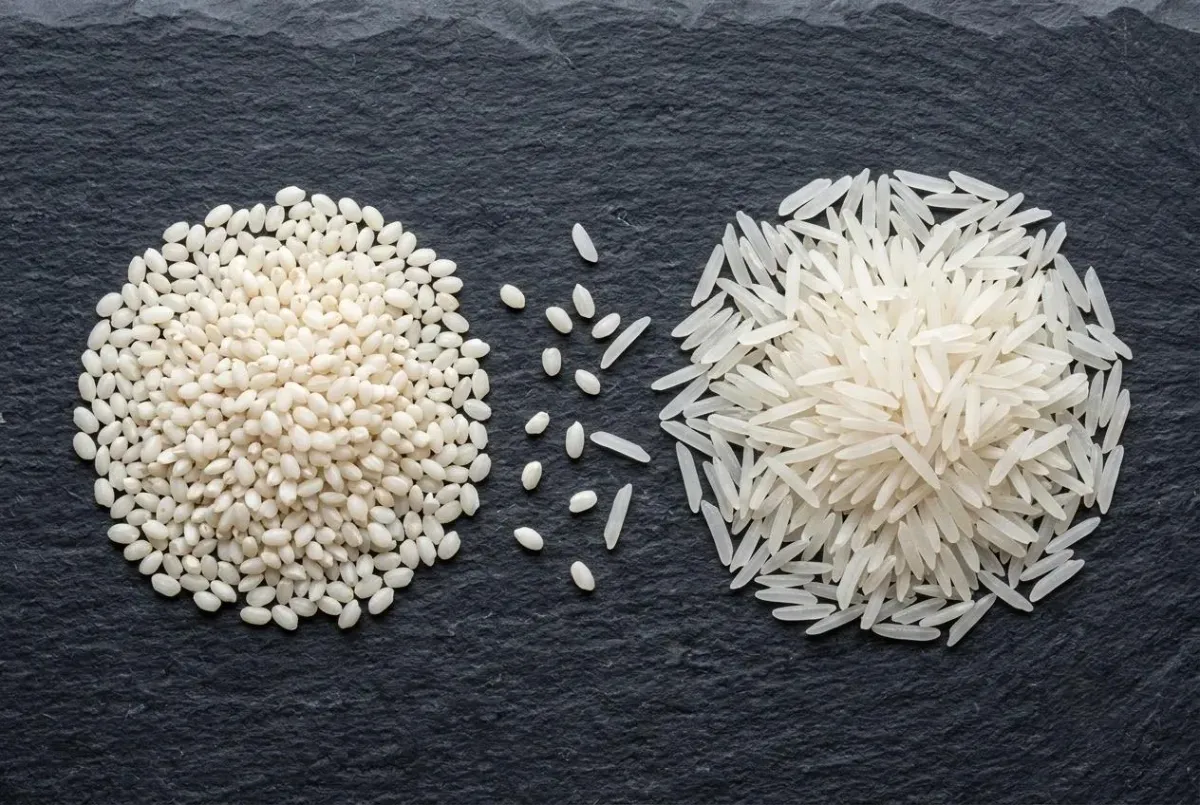
Seeraga samba (சீரக சம்பா) is a short-grain aromatic rice named after seeragam (சீரகம்), the Tamil word for cumin, because its grain is shaped like a cumin seed. The grain is about a third the size of basmati and cooks firmer, absorbing masala rather than staying fluffy. It is grown mainly around Uppiliyapuram in Tiruchirappalli district and in Nagapattinam and Thanjavur.
Several of Tamil Nadu's best-known biryanis use it. Dindigul Thalappakatti has cooked with seeraga samba since 1957, when Nagasamy Naidu opened a four-seat hotel. Ambur biryani uses it too, as does Kongu vellai biryani, a mild white biryani made with green chilli and coconut milk. In Kerala, Thalassery biryani uses a similar short grain known locally as kaima rice (കൈമ അരി).
Kalpasi is called black stone flower in English. It is a lichen used as a spice in Chettinad cooking.
Kudampuli is known as Malabar tamarind. It is the dried rind of the Garcinia gummi-gutta fruit and is used to sour Kerala fish curry.
Kochai varuval is a dry fry made from kōchai, a native rooster of fighting stock from the Kongu region around Erode. It is cooked slowly with small onions and dry red chillies.
It depends on the style. Short, firm seeraga samba suits Dindigul and Ambur biryani, while long, fluffy basmati suits Hyderabadi and Lucknowi biryani.