By Mithun
The spices, method and styles behind Chettinad chicken, from kalpasi and kapok buds to pepper chicken and the dry varuval.
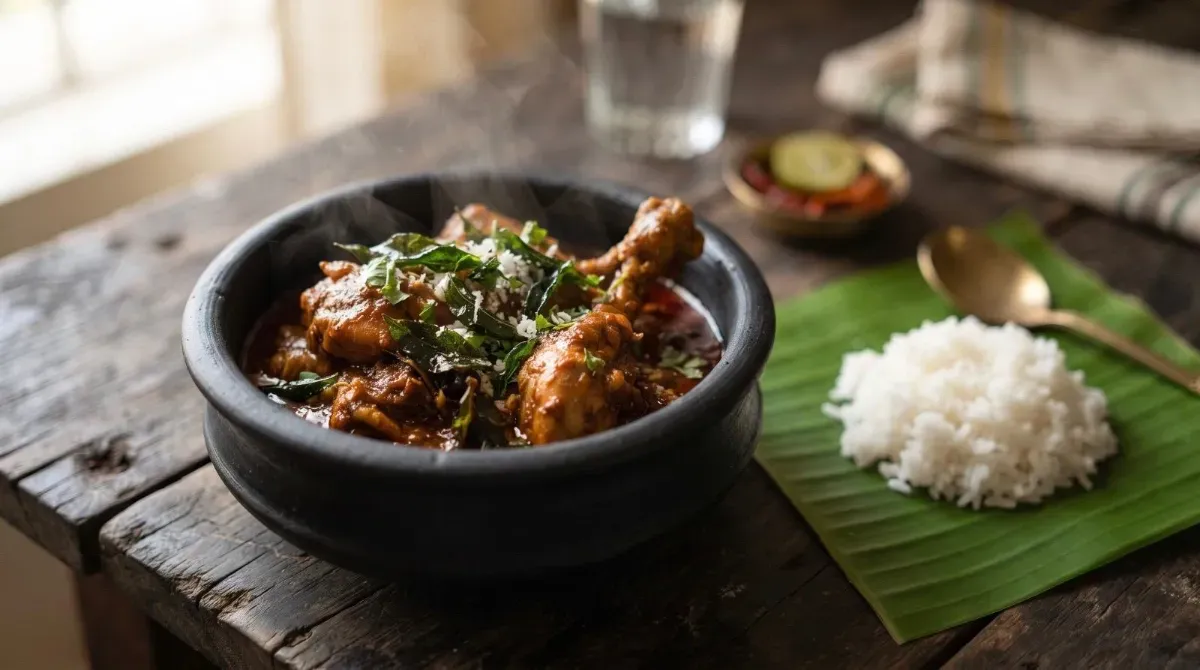
Chettinad chicken, also called chicken Chettinad, is a chicken curry from the Chettinad region of Tamil Nadu. It is made with whole spices that are dry-roasted and ground fresh, roasted coconut and gingelly oil, and it is the best-known dish of Chettinad cuisine. This guide covers where it comes from, the spices that give it its flavour, how it is cooked, and its main styles.
Chettinad (செட்டிநாடு) is a cluster of villages in the Sivaganga and Pudukkottai districts, around the town of Karaikudi. It is home to the Nagarathars (நகரத்தார்), a merchant community that traded across Burma, Ceylon, Malaysia and Singapore from the late eighteenth century. That trade brought meat into a kitchen that had been largely vegetarian.
In Chettiar homes, a meal traditionally included one meat dish or none, and several meat dishes were served only at weddings and other functions. Restaurants carried Chettinad chicken beyond the region: Anjappar, founded in Chennai in 1964, now serves Chettinad food in 16 countries.
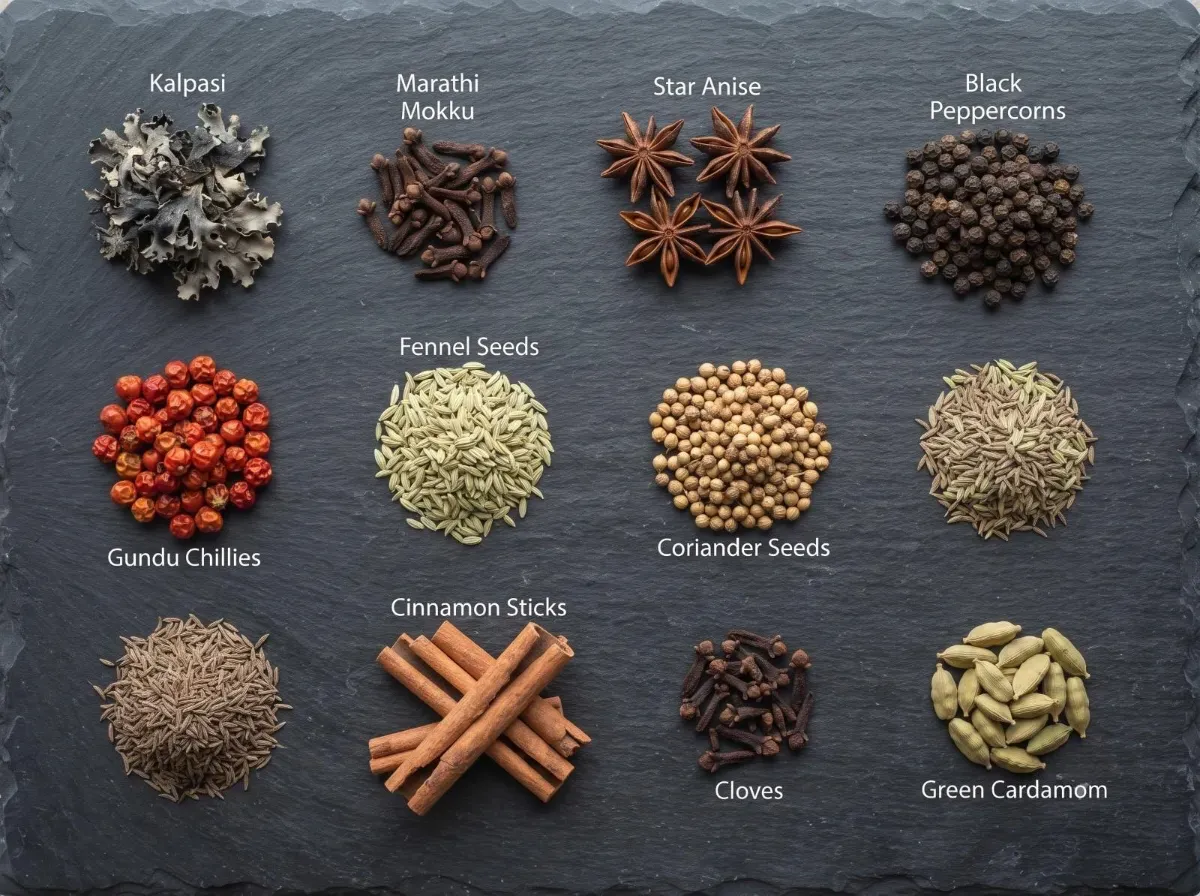
The flavour of Chettinad chicken comes from its masala, a blend of whole spices roasted and ground for the dish. None of these spices are grown in Chettinad itself.
| Spice | What it adds |
|---|---|
| Kalpasi (கல்பாசி), black stone flower | An earthy, woody aroma. A lichen, used in small amounts because too much turns the curry bitter. |
| Marathi mokku (மராத்தி மொக்கு), kapok buds | Woody depth and a slight sweetness |
| Star anise | A faint liquorice note. Used sparingly so it does not dominate. |
| Black pepper | Sharp heat |
| Gundu milagai (குண்டு மிளகாய்), round dried chillies | Rounded, smoky chilli heat |
| Fennel, coriander, cumin, cinnamon, cloves, cardamom | Warmth and body |
The round chillies are often the Ramanathapuram mundu variety, a chilli from the neighbouring district that carries a geographical indication tag. Packet Chettinad masala powder is a common shortcut today, but traditional kitchens roast and grind the spices for each dish.
Marathi mokku, called kapok buds in English, is the dried flower bud of the silk cotton tree (Ceiba pentandra). The buds are dark brown to black and about 1 to 2 cm long, with a woody, aromatic flavour. Cooks either fry them in hot oil at the start or dry-roast and grind them into the masala. Outside Chettinad, the spice is also used in bisi bele bath powder in Karnataka.
The masala is roasted and ground fresh. Whole spices are dry-roasted until fragrant, then ground. Traditionally this was done by hand on a grinding stone. A second paste thickens the gravy. Grated coconut is roasted and ground with poppy seeds (kasa kasa, கசகசா). Many restaurants use cashews or roasted chana dal in place of poppy seeds. The cooking fat is gingelly oil (nallennai, நல்லெண்ணெய்), the sesame oil widely used in Tamil cooking. The chicken is bone-in and traditionally not marinated. Slow cooking over low heat let the meat absorb the salt and spice. Many modern recipes add a short yogurt or lemon marinade. Tomatoes are used in small amounts. Chettinad chicken is not a tomato-based curry. It is cooked until the oil separates. A traditional version takes about an hour, which is far longer than most restaurant versions.
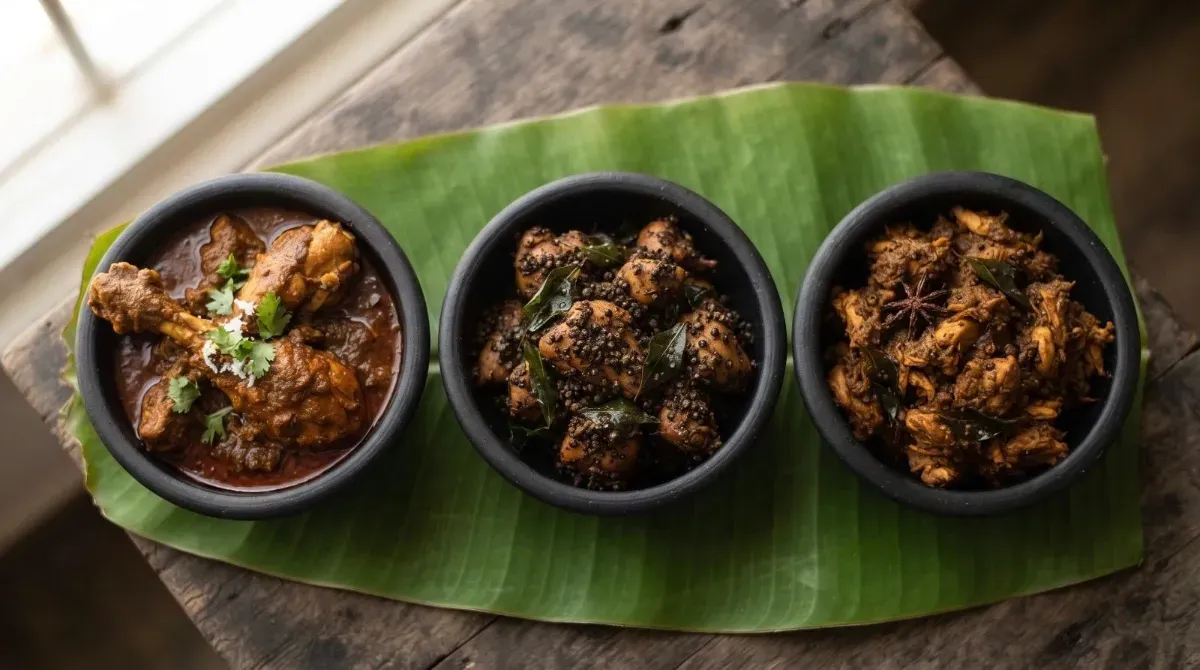
Kozhi kuzhambu (கோழி குழம்பு): the gravy version, eaten with rice. This is what most menus call Chettinad chicken curry or gravy. Milagu kozhi varuval (மிளகு கோழி வறுவல்): Chettinad pepper chicken. Black pepper replaces part of the chilli, and crushed pepper is added at the end to keep its aroma. Chettinad chicken dry (varuval): a dry fry in which the masala clings to the chicken with little or no gravy. Chettinad chicken biryani: cooked in one pot with seeraga samba rice and coconut milk rather than a yogurt base.
| Traditional home style | Common restaurant style | |
|---|---|---|
| Masala | Whole spices roasted and ground by hand for each dish | Often machine-ground or ready-made |
| Thickener | Roasted coconut and poppy seeds | Coconut with cashews or roasted chana dal |
| Marinade | None | Often yogurt or lemon |
| Cooking time | About an hour | Much shorter |
| Served with | Rice | Rice or parotta |
It is spice-rich rather than simply hot. The heat comes from black pepper and dried chillies, balanced by coconut, fennel and star anise, and food writers who have eaten it in Karaikudi describe it as layered rather than fiery.
Kalpasi, marathi mokku, star anise, black pepper, dried red chillies, fennel, coriander, cumin, cinnamon, cloves and cardamom, dry-roasted and ground.
Rice is the traditional pairing. Parotta is popular today but is a recent addition to Chettinad meals.
Chettinad chicken is a gravy built on a mixed spice masala. Pepper chicken (milagu kozhi) uses black pepper as the main source of heat and is usually drier.